
A live IP production path can deliver clean pictures and audio for hours while concealing fragile clock selection, multicast routing or receiver failover. The question for broadcasters is not whether ST 2110 works. It is what evidence proves the plant will keep working during a fault or change.
What SMPTE is showing this week
On November 12, SMPTE announced that The Studio B&H and Riedel Communications would provide video infrastructure and communications technology for the Solutions Hub at the November 16-19 Media Technology Summit in Pasadena. The setup is both a technology demonstration and an operational backbone for conference video and audio distribution.
SMPTE's event page describes a miniature ST 2110 workflow capturing, transporting and displaying sessions from two Technical Conference rooms during Tuesday and Wednesday. This is a planned live showcase, not an independently verified report of its operational results as of this article.
Sources: SMPTE's November 12 announcement and the official ST 2110 demonstration description.
TV Tech's November 16 conference preview places the showcase within a broader discussion of IP and software-defined production, dynamic media facilities, content provenance and new HDR workflows: https://www.tvtechnology.com/events/rebuilding-broadcast-on-air-inside-the-2026-smpte-media-technology-summit
Why it matters to master control
ST 2110 separates professional media essence into IP flows. That creates flexibility for routing and production, but the operational acceptance test must span the network, the timing domain and the actual decoded output.
A multicast subscription can succeed while an audio receiver follows the wrong clock. A timing alarm can appear during a grandmaster transition without an immediately visible picture failure. Conversely, a picture disturbance may appear before a dashboard exposes its cause. These are engineering failure scenarios to test, not claims about the Summit installation.
The practical objective is a shared incident timeline across PTP, switches, senders, receivers and the monitored programme.
1. Inventory the actual flows. For each production source, document video, audio and ancillary streams, multicast addresses, receiver subscriptions, bandwidth and intended destination. Confirm the router's label maps to the intended media rather than merely a valid subscription.
2. Prove clock selection. Record PTP domain, grandmaster identity, endpoint lock state and timing offsets. Force a controlled grandmaster switchover and correlate lock transitions with decoded audio/video. A practical July 2026 engineering guide discusses SMPTE ST 2059 profile, boundary clocks and timing-domain hygiene: https://www.mdlcommunications.com/engineers-toolkit/guides/ptp-ip-media.html
3. Exercise the network failure. In a maintenance lab, isolate a redundant switch or link. Measure actual media interruption, multicast convergence and receiver recovery. A redundant cable is not equivalent to a verified independent path.
4. Change a route during programme. Switch a source and destination under realistic load. Check whether picture, audio channel identity, synchronization and any relevant ancillary content remain correct. Preserve both operator-command and receiver-visible timestamps.
5. Test a partial failure. Drop one essence flow while leaving others intact. Does master control see the missing audio or metadata, or does a healthy video monitor conceal the defect? Test that an alarm identifies the affected service, not only the network interface.
6. Rehearse return to normal. Restore the primary clock or network path and verify that receivers recover without oscillation or silent wrong-source selection. Capture whether intervention is required and which alarm clears automatically.
What to ask the vendor
Ask for a fault-injection record showing the pre-fault state, exact injected condition, first observable impairment, alarm time, failover behavior and final decoded output. A packet capture alone is insufficient; a clean multiviewer alone is insufficient. Both matter when an engineer has seconds to decide whether to switch or hold.
This is the editorial distinction: the Summit demonstration can show the architecture operating. Facility acceptance requires showing how that architecture fails, signals trouble and recovers under local constraints.
For additional context, see five master-control acceptance tests for SDI-to-IP migration.
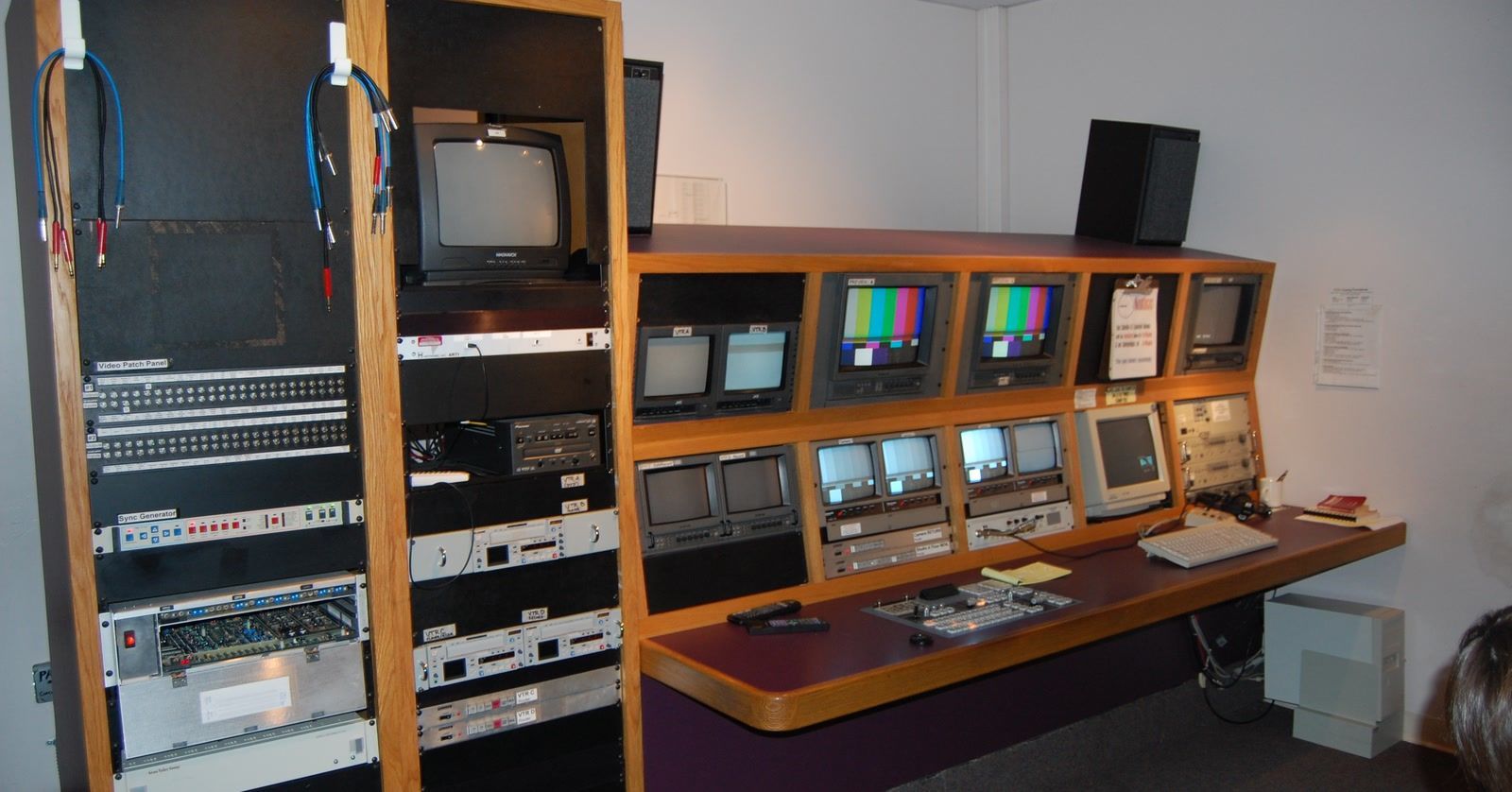
Image credit: Bluedisk, TV Station Control Room, CC BY-SA 3.0. Archival photograph from 2008, not the SMPTE Summit. For a 1600 × 838 cropped and JPEG-recompressed publication derivative, disclose the modifications and distribute the derivative under CC BY-SA 3.0.