
A new industry survey shows that SDI remains central to broadcast operations. Before replacing a master-control path with IP, test the operating outcome, not just the network connection.
The migration gap is measurable
SDI remains the primary infrastructure for 70% of broadcast and media companies in an online survey by TVBEurope, TV Tech and Caretta Research. 90% of respondents use SDI somewhere, while just 22% of broadcaster respondents say IP has reached most of their operation, according to the survey published October 7 and updated October 13. A separate Haivision survey released March 4, 2026 reports SDI use among 82% of its more than 1,300 professional respondents, with SMPTE ST 2110 use at 30%. These are different survey samples and questions, not a time series. Neither is a census of every broadcaster. The distinction matters as vendors sell software-defined facilities. An IP island can be successful without replacing the entire plant. A new Ethernet-connected device is not proof that a broadcaster can safely change, monitor and recover a complete service.
Why master control is the hard test
The Caretta survey identifies master control among the production areas furthest along in IP integration and most likely to be upgraded in the next year. Nearly half of buyers nevertheless regard added technical complexity as the main outcome of IP infrastructure. Only 16% cite business efficiency, compared with 39% of vendors. On November 3, TVBEurope's software-defined facility discussion will address IP architecture, timing, interoperability and operational skills. That makes this a practical procurement question, not a reason to declare SDI obsolete. SMPTE ST 2110 carries separate professional video, audio and ancillary essences over managed IP. SRT contribution feeds and HLS delivery are different operating boundaries. A facility can use all three without having one unified control, monitoring or failure model.
Five acceptance tests before cutover
1. Route the right source, then prove it. Reassign a live source to a backup destination. Check that the controller discovers and connects the intended endpoints, and independently confirm the correct program at the output. AMWA's NMOS testing tool can exercise API behavior, but API success is not a picture-and-sound acceptance test. 2. Break the timing dependency. Under an authorized maintenance test, interrupt a selected timing source or introduce a controlled timing-path fault. Observe what alarms, what remains synchronized, and how recovery is documented. Set acceptance thresholds from the service's own timing and continuity requirements, not a generic dashboard color. 3. Prove the redundant paths are independent. Disable one network path while the protected stream remains on air. Confirm uninterrupted receiver output where hitless protection is specified, and verify that operations sees the degraded A or B path. A healthy output must not conceal the loss of redundancy. 4. Verify every media essence. Compare video identity, audio channel mapping and language, captions or other ancillary data before and after routing. The AMWA IS-08 audio mapping specification supports channel-level mapping, but does not establish that a selected audio channel contains the expected language. Check the decoded result. 5. Rehearse the expensive change. Extend a live sports program, switch one regional service, then return to the scheduled junction. Record operator actions, elapsed recovery time, affected destinations and the rollback path. Include the cost of network engineering, monitoring, spares, training and dual-running alongside equipment savings.
The decision is an evidence gate
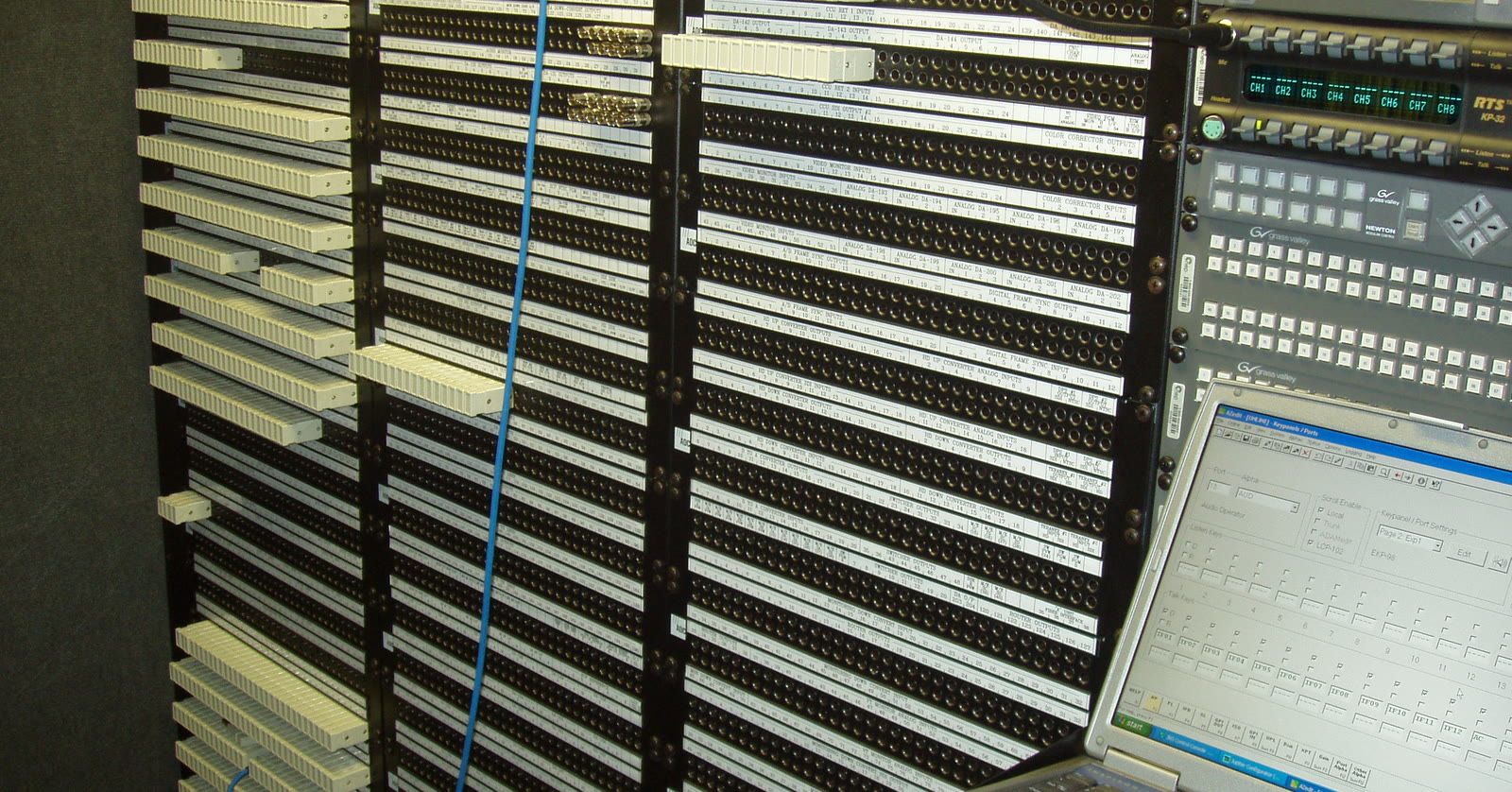
Ask suppliers to demonstrate a complete service transition using your routing plan and failure cases. Keep the existing SDI path until the IP path has passed agreed tests for media correctness, recoverability and operator workload. The strongest business case for IP is not that packets replace coax. It is that authorized changes become easier without making on-air faults harder to diagnose. Image: Pcpeggs, archival remote television broadcast trailer jackfield, Wikimedia Commons. Released into the public domain by its author. Proposed 1600×838 crop of the original photograph. This is not a photograph of a 2026 IP deployment.