
A vendor can demonstrate a working Media eXchange Layer (MXL) connection and still leave a broadcaster with unanswered procurement questions. Which two products exchanged media? On which hosts? What happened to program output when one process restarted? Put those questions in the RFP while bidders can still compete on the answers.
The EBU’s MXL overview describes an open interface for exchanging media between software functions. The Dynamic Media Facility programme puts that interface in a wider engineering context. AMWA’s IBC 2026 programme provides a starting point for asking vendors which demonstration and software versions underpin a claim. The following acceptance criteria are proposed purchasing terms.
Specify the signal path bidders must prove
1. Name both vendors. Ask for a producer and a consumer from different suppliers, their software versions, media formats and the evidence available to your engineers. Have the bidder identify any custom adapter. That determines who maintains the integration after an upgrade.
2. Draw the host boundary. Require separate diagrams for a co-located pair and a pair on different hosts. Identify where media is copied, transported or converted and who supplies each component. Run the capacity test on the topology the facility expects to buy.
3. Include the existing plant. Put one actual SDI or ST 2110 handoff in the trial. Record channel mapping, timing reference, gateway ownership and the expected operator alarm when that handoff fails. Include gateway costs in the bid.
4. Show the overnight shift what broke. Interrupt the producer in a rehearsal. Ask an operator to locate the failed component using the proposed tools. Record which alarms appeared, which signals looked healthy and how the operator confirmed recovery.
Make acceptance evidence part of the purchase
5. Assign timing ownership. Require a named owner for synchronization across the chain. Compare input and output against the facility’s reference and repeat across a restart. Agree the latency and sync tolerances before the demonstration.
6. Specify recovery for each failure. Exercise a process crash, a lost host and a failed gateway separately. Capture the viewer-facing interruption and any manual action. A replacement process starting successfully does not establish when usable pictures and audio returned.
7. Price one real workload. Compare the current and proposed cost of running the same monitoring or production path for the same hours and availability requirement. Include standby compute, licensing, gateways and support. Ask which cost scales when another consumer subscribes to the flow.
8. Separate deliverables from roadmap dates. For every requirement, ask the bidder to classify support as shipping, demonstrated or planned, identify the applicable release and supply an acceptance artifact. Procurement can then tie payment or rollout to evidence the engineering team can reproduce.
Start with one path that the commissioning team can interrupt safely. Give every bidder the same source media, failure scenarios and acceptance sheet. The resulting timing traces, output recordings and recovery steps give the buyer a basis for comparing proposals after the show floor has closed.
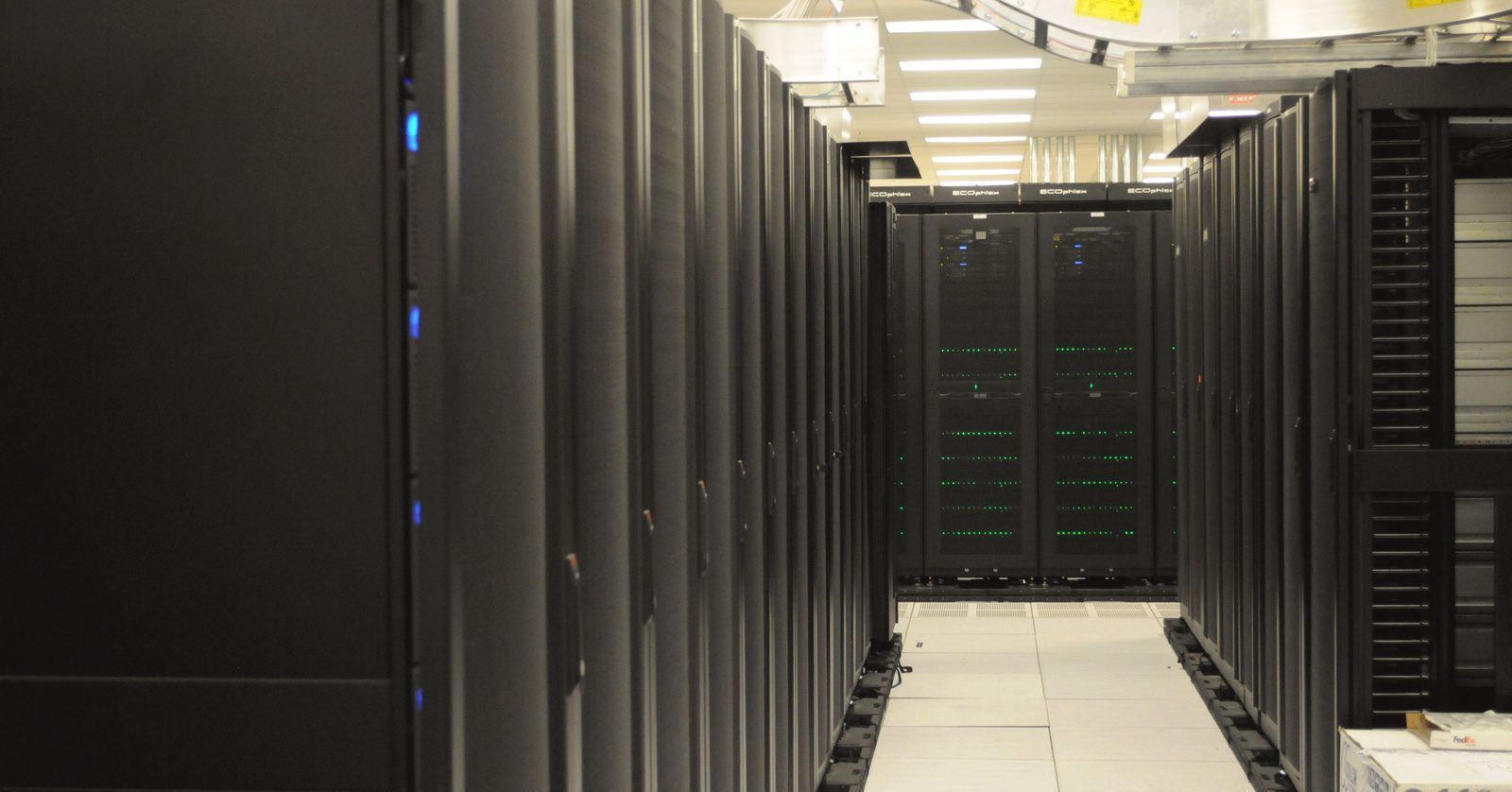
Photo: Front of server racks at NERSC by Derrick Coetzee. Archival illustration. Cropped and JPEG-encoded. CC0 1.0.