
Dek: Rain fade can erode satellite link margin well before a receiver loses lock, so master control needs RF, transport and decoded-picture evidence together.
A satellite downlink can look normal at the decoder while its RF margin is disappearing. The useful alarm is not simply "signal lost." It is the sequence of degrading carrier quality, increasing correction activity, transport impairment and eventual picture or audio failure.
For master control, this is an operational distinction. A storm near a receive site can produce a local impairment even when the originating program and satellite transponder are healthy. Escalating immediately to the content provider may waste the minutes needed to switch to a viable alternate.
Why it matters
The International Telecommunication Union's ITU-R P.618-14, August 2023 models Earth-space propagation effects, including rain attenuation and site diversity. Its separate P.619-6 recommendation, September 2025 notes that precipitation attenuation is often a major degradation mechanism for Earth-space paths above roughly 5 GHz.
Neither recommendation sets a universal operational alarm threshold for every broadcaster. Receiver implementation, modulation, coding, antenna size, site geography and link budget all matter. A useful threshold must be established for the actual path, not copied from another facility.
Seven checks for the downlink runbook
1. Trend carrier quality, not just lock state. Capture C/N or C/N0, MER where supported, Eb/N0 and receiver lock state at a consistent interval. Use the metrics actually exposed by the demodulator. A locked receiver can still have shrinking margin.
2. Watch error correction before the cliff. Compare pre-FEC and post-FEC error metrics when available, and record the exact receiver definitions. Increasing corrected errors can provide warning, while post-FEC errors may coincide with visible impairment.
3. Correlate RF changes with transport evidence. Monitor MPEG-TS continuity errors, packet loss, PCR behavior and decoder errors downstream. A clean transport snapshot does not prove the RF path has adequate future margin; a damaged stream does not by itself identify rain as the cause.
4. Check weather at the correct ground site. The affected location might be the uplink, downlink or both. Use site-specific precipitation observations and antenna-path context, not just a generic regional forecast.
5. Verify the backup is genuinely independent. A second receiver connected to the same dish and LNB does not protect against a common RF fade. A geographically separated receive site, independent terrestrial path or different delivery mechanism may offer better protection, but each needs its own failure analysis.
6. Exercise the switch while the primary is still usable. Confirm backup acquisition, audio channel mapping, captions, timestamps and return-to-primary logic. Record whether the switch is automatic or operator-authorized, and define the conditions for both directions.
7. Preserve a synchronized incident timeline. Store RF metrics, receiver alarms, transport counters, decoded output status, local weather and operator actions against a common clock. Without that sequence, the postmortem becomes a contest between the satellite vendor, transport provider and decoder supplier.
What engineering should decide before the next storm
Start with a measured baseline for each receive chain in clear conditions. Determine how much margin exists above the receiver's operational decoding threshold and where warnings should occur. Test the backup path under a controlled primary-path interruption, including captions and audio continuity.
The ITU satellite communications handbook explains why rain effects vary with frequency, elevation angle and rainfall intensity. ITU's propagation-method guide identifies P.618 as a basis for satellite-path loss and diversity planning. These are engineering inputs, not substitutes for a site acceptance test.
Three questions belong in the handover: Which metric gives operators the earliest reliable warning? Does the alternate path avoid the same weather and infrastructure? What evidence is required before returning traffic to the primary?
Bottom line: Treat rain fade as a progressive loss-of-margin event with a tested switching policy, not a binary receiver alarm. That creates time to act before viewers see black, frozen pictures or missing audio.
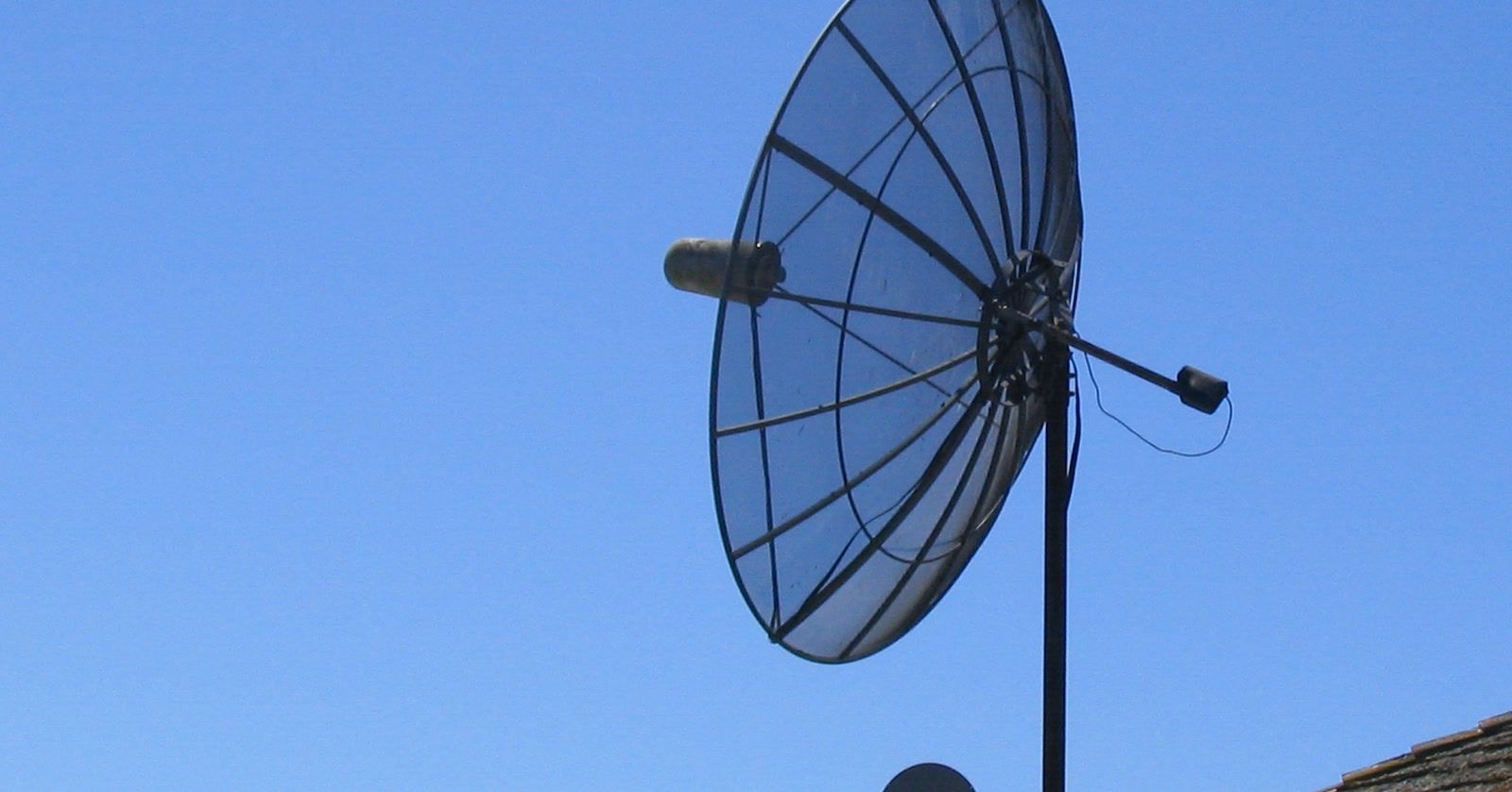
Image credit: Jan Tik, ["Connected Again," July 21, 2005](https://commons.wikimedia.org/wiki/File:Satellite_dish_(Television).jpg), CC BY 2.0. Historical illustrative photograph, not an image of a current broadcast incident. Intended edit: landscape crop and JPEG re-encoding; credit and license remain applicable.