
A viewer opens a live stream, selects Spanish subtitles, and sees English. The subtitle service may be present, the playlist may load and the CDN may return HTTP 200. None of those checks establishes that the intended text reaches the screen.
This is an evergreen commissioning problem, not a report of a new broadcaster outage. The important distinction is between track availability, track identity, player selection and rendered output.
Why it matters
An HLS multivariant playlist describes alternate subtitle renditions using EXT-X-MEDIA. Under RFC 8216, published August 2017, the TYPE=SUBTITLES declaration can include a human-readable NAME, LANGUAGE, DEFAULT, AUTOSELECT and a URI pointing to the actual subtitle playlist. These are instructions and descriptors, not independent verification of the language spoken or displayed.
One easily missed packaging detail is documented by AWS Elemental MediaPackage v2: it marks the first subtitle track in the input order DEFAULT=YES and AUTO-SELECT=YES, overriding input default and auto-select settings. Its earlier MediaPackage feature documentation describes the same ordering behavior. A changed track order can therefore change the default viewing experience without removing a single subtitle cue.
That behavior is product-specific. It should not be generalized to every HLS packager or player.
Where the error enters
A language mismatch can originate before packaging when a subtitle service is mislabeled, at the packager when rendition ordering or attributes change, or at the device when language preferences and player logic select a different track. Apple documents alternate-media authoring in its HLS developer guidance.
The operational risk is clearing a ticket after checking only the manifest. A successful fetch says nothing about whether the captions are in the right language, synchronized or legible.
Six acceptance tests
- Identify the source language. Use a known test programme with distinct, verified subtitle text in each language. Record the source service identifier, intended language and a sample of actual cues. Do not infer language from a label alone.
- Inspect the multivariant playlist. Capture every subtitle
EXT-X-MEDIAentry, includingGROUP-ID,NAME,LANGUAGE,DEFAULT,AUTOSELECTandURI. Confirm that the variant references the expected subtitle group and that there is no unintended default. - Follow the subtitle playlist and segments. Request the actual WebVTT resources, not just the master playlist. Compare their content with the source sample and inspect timestamp alignment around programme boundaries.
- Change input order deliberately. In a nonproduction test, reorder language tracks and compare the resulting manifests. Where MediaPackage's documented default-selection behavior applies, verify that the preferred language remains first or explicitly adjust the upstream configuration.
- Test real-device selection. On each supported television, mobile platform and browser, test first launch, explicit language selection, application restart and language-preference changes. Record both the selected menu label and the words actually rendered.
- Rehearse live transitions and recovery. Test an ad break, source switch, subtitle-track interruption and return to programme. Check whether the player restores the correct language, whether cues remain synchronized and whether an operator can identify the first affected segment.
What the NOC should record
A useful incident record joins four facts: the expected programme language, the manifest rendition metadata, the downloaded cue text and the viewer-visible result. Add timestamps, device/app versions, source and packaging configuration, and the first point where the evidence diverges.
A mismatch found only on one device suggests a different investigation from wrong cues found in the packager output. Neither observation alone establishes root cause. The acceptance criterion should be written in viewer terms: the requested language appears, at the correct time, throughout the live programme and after recovery.
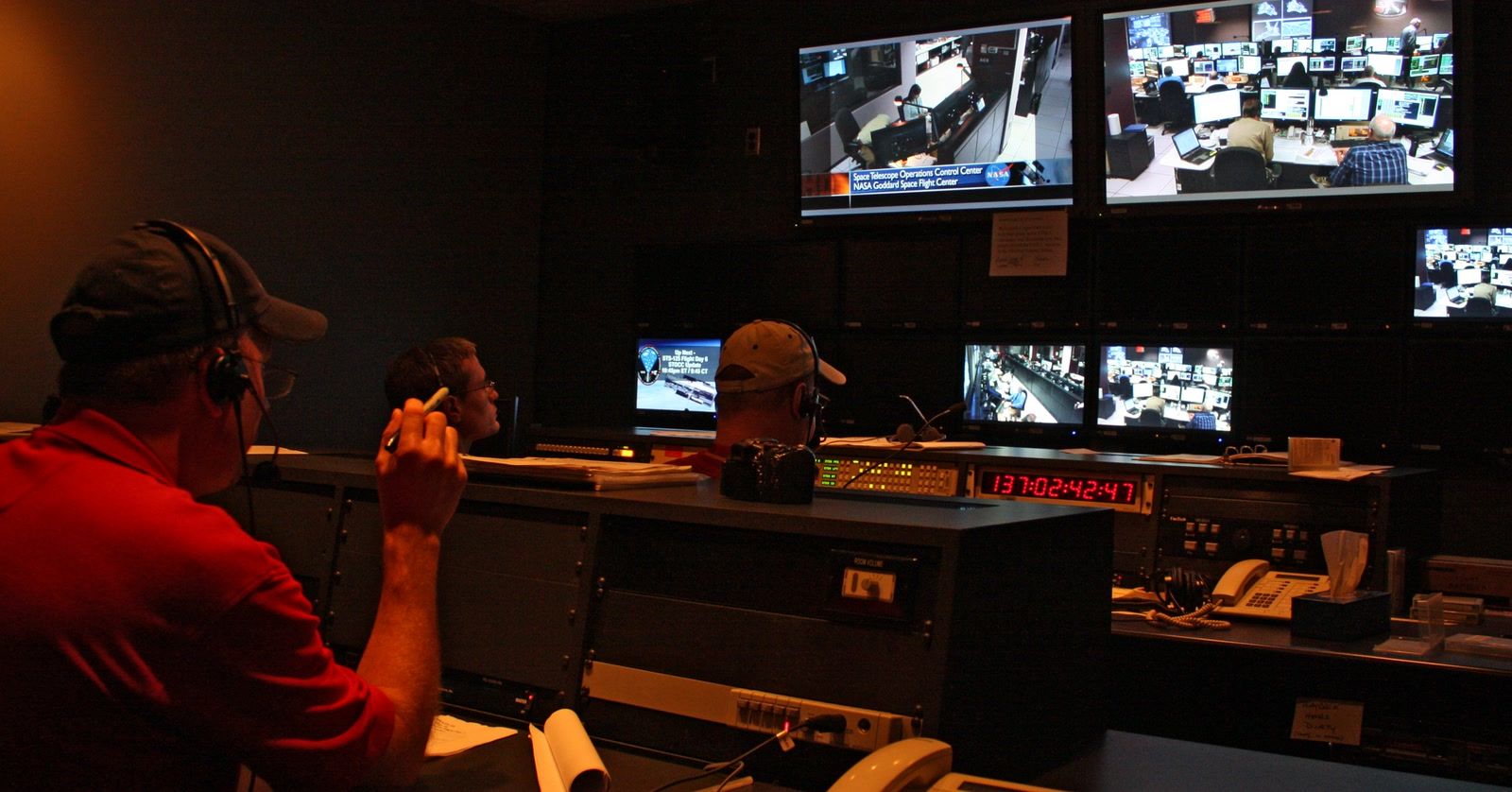
Image credit: NASA Hubble Space Telescope, Television Studio Control Room, May 2009, CC BY 2.0. Archival illustrative photograph, not a documented HLS failure. For the publication derivative, crop to 1600 × 838, re-encode as JPEG, and disclose these changes under CC BY 2.0.
Sources reviewed November 15, 2026. This article presents engineering recommendations, not measured results from a specific deployment.